The Making of Sea Change
Sea Change began in a damp basement in North Caldwell, NJ, a few months into the COVID-19 pandemic. Remember the days of washing groceries, living and dying by Dr. Fauci's words, and watching the antics of an unhinged President who asked whether injecting bleach might be a way to treat COVID-19.
Isolation and working remotely are not my cup of tea. To maintain my sanity, I took my computer into our basement and found the beginnings of a long-neglected novel. A post-apocalyptic story about the birth of a new world after a pandemic sweeps the earth. The story goes that the vaccine developed to combat the pandemic renders all but a few in the population sterile, and civilization must begin again.
The manuscript consisted of about a hundred very rough pages I had written some 4 or 5 years earlier, when a pandemic had not yet swept the planet and the battle over the value of vaccines was a back-page story. Frustrating weeks spent trying to resurrect a novel that should have stayed dead had my fingers wandering across the keyboard, and Sea Change began to take shape.
Trapped because of the pandemic and in a job that left me down, I was seeking escape.
Sailing had long been my passion, so this became a sailing novel. What better way to escape than into a romance? Enter Keith and Andrea. As the author is a man on the brink of middle age and writing is therapy, Keith wrestles with whether there should be more to life than work that leaves no lasting evidence of one’s existence. Breaking free from the constraints of convention extends the escapist theme and makes Sea Change an adult coming-of-age novel. As a fan, a truly passionate fan of CS Forrester’s Hornblower series, I knew I should throw in some pirates. These are the elements of Sea Change.
The book took a few years to write. I had much to learn about becoming an author. One lesson I learned was that habit is the key to progress. So every day, I get up a little earlier than I need to and spend my first productive hour of the day in a coffee shop, having a bagel and coffee, and write, revise, research, watch YouTube videos on everything to do with becoming an author, and edit, and then more editing.
The second edition of Sea Change is a product of my ongoing education. The first edition was reasonably good. None of my reviewers felt it necessary to point out the numerous editorial errors that now scream at me from the pages. So, with Storm Waring nearly finished, I decided to release a higher-quality edition of Sea Change as well. The story is the same. It is now professionally edited, and I broke up a couple of impossibly long chapters and improved some word choices. It is a better novel. I also hired a new cover designer for both books. I worked with a young woman, Milica Stankovic, who did a wonderful job on the covers. I hope you enjoy Sea Change.
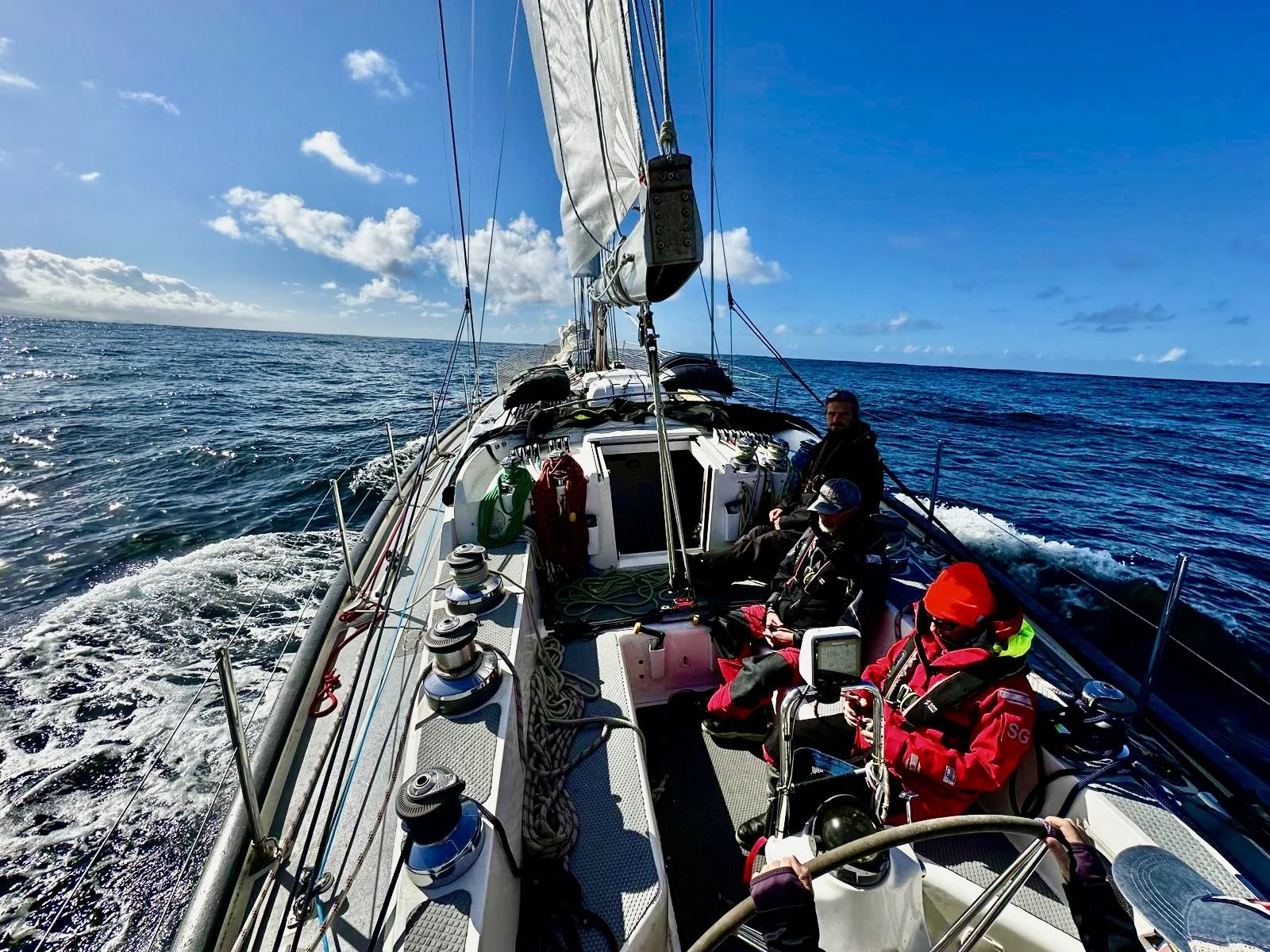
Off Falmouth, England 2024
The Making of Storm Warning
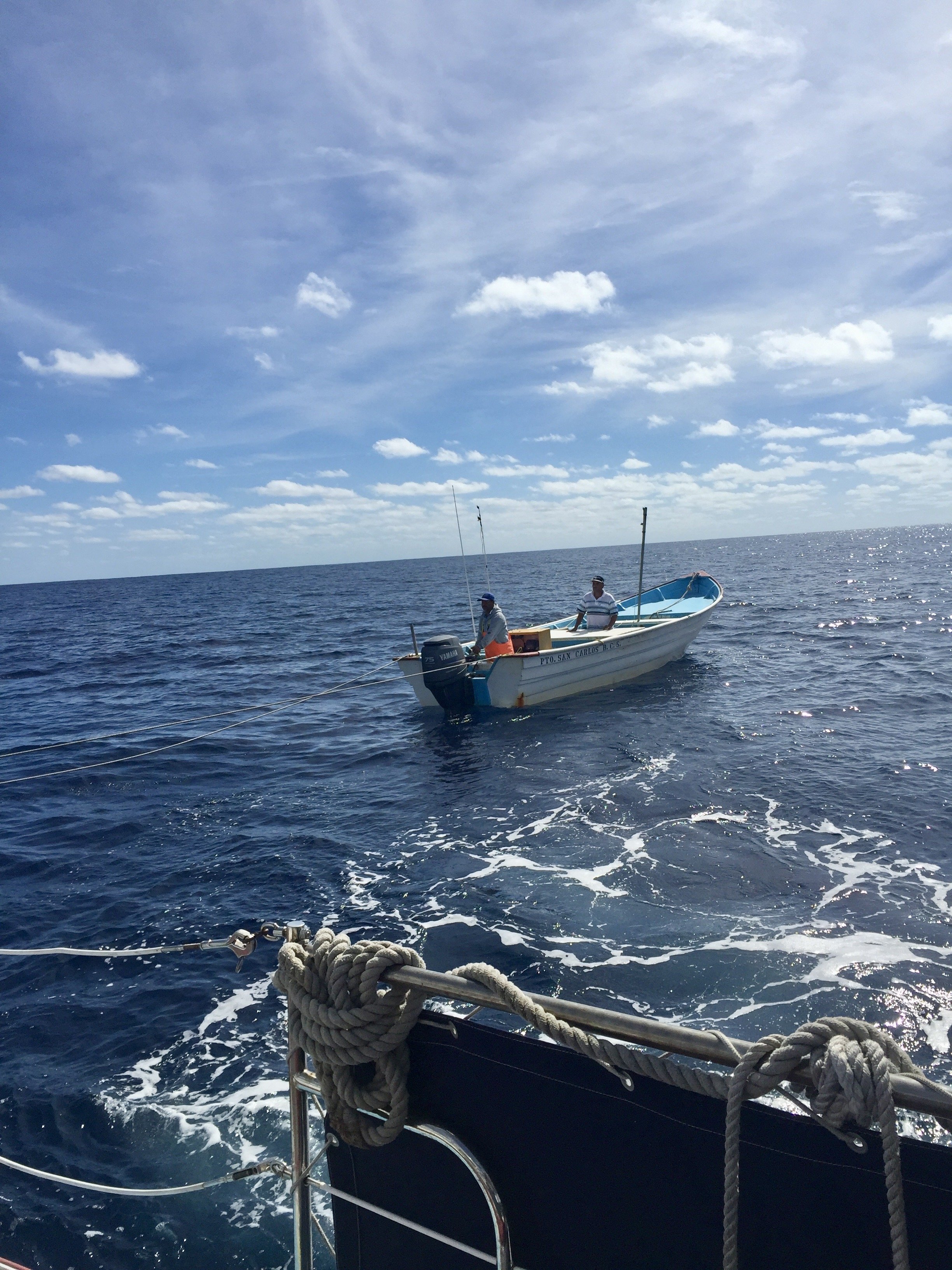
The author being rescued by shrimp fisherman off the coast of Baja - 2015
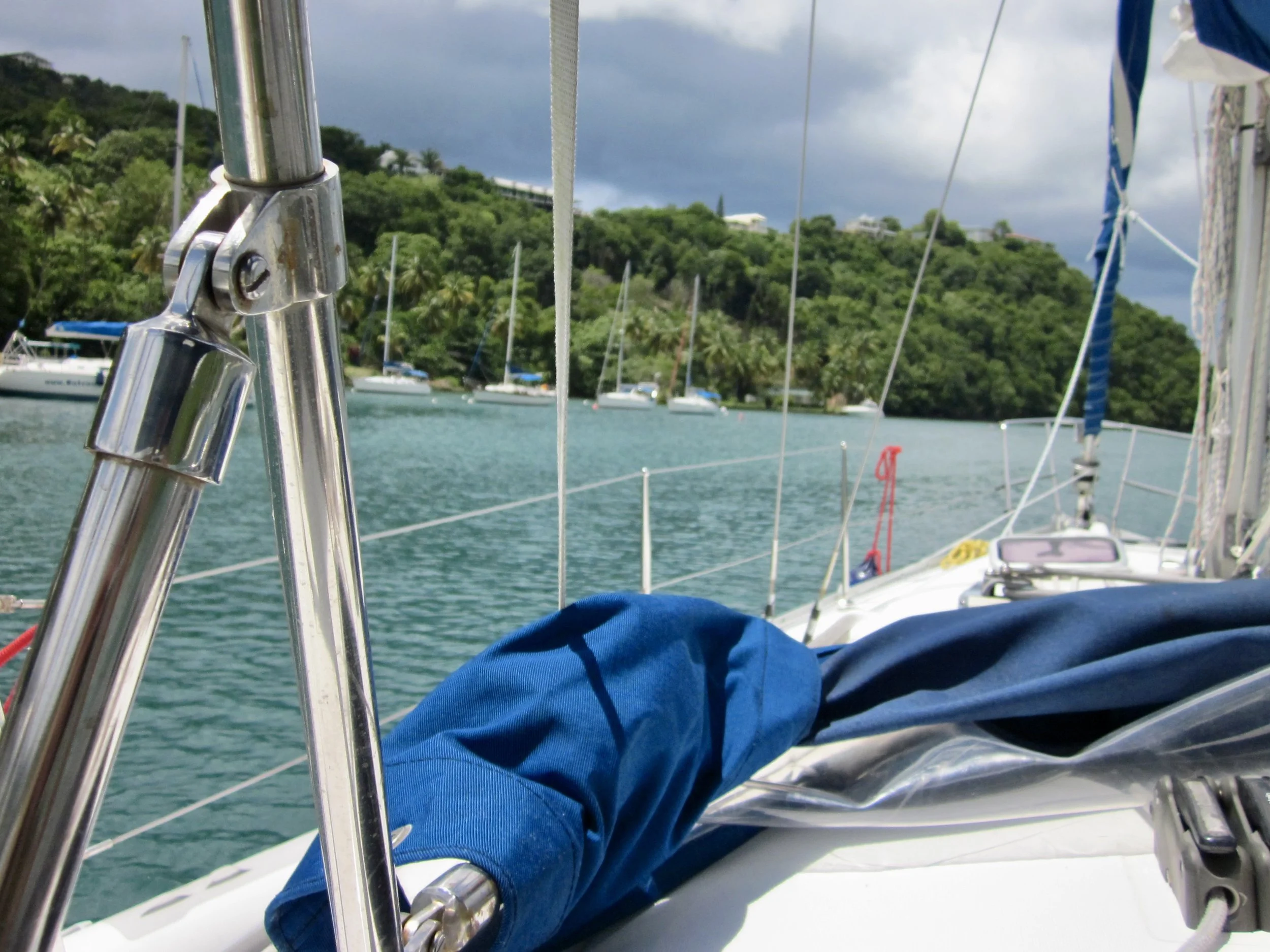
Chartering a boat in St. Lucia
I always knew that Keith and Andrea’s story would not be captured in a single novel. Sailing around the world, I had conceived of it as a four-book project, a novel for each cardinal direction of the compass. Though I had not mapped out the scope of each novel, my writing, at least in the first draft, flows organically without a detailed outline. As I began Storm Warning, I asked myself what the conflict would be, what dangers would threaten our heroes, and what problems Keith and Andrea would have to solve.
Having written Sea Change during the early months of COVID, I had moved back to California from NJ by mid-2021 to do my part to support patients through the pandemic. Wanting to get back into the action, I left my consulting position and took a position as Chief Medical Officer for a hospital in Northern LA County.
By the time I returned to the hospital, the worst of the first wave had passed, but, as we all learned, more waves were coming. In my small way, I helped guide that organization through the pandemic and focus our efforts on providing care to the community. Just as there was no map to guide people through the beginning of a pandemic, there were no charts showing a path out. Guidance was scarce, and politics was contentious.
In California, we prioritized caution over science and common sense, whereas in other states the emphasis was on thumbing your nose at both. By chance, not design, I realized that Keith and Andrea began their trip across the Pacific as the pandemic was beginning, so I knew I needed to weave in my experiences and the country's into the story.
I’m a doctor, specifically a pediatric critical care doctor. So what the heck, someone should get sick. Storm Warning opens with Andrea on the verge of oblivion, suffering from a twisting of her intestines, a complication of her earlier treatment for ovarian cancer.
The first act is my opportunity to share my years of experience of what it is like to be in the ICU, the pain and uncertainty of having a loved one on the verge of oblivion. It also serves as a setup for the terror many felt when the pandemic gripped the country, particularly in those early days of uncertainty and reduction. It also serves as the emotional foundation for the trauma Eliana experiences later in the book.
Many of the vignettes in Storm Warning, including taking a young patient to Disneyland while on a ventilator, being rescued off the coast of Baja by shrimp fishermen, and being becalmed in the Great Pacific Garbage Patch are drawn from my own experience. Each of the actual stories are, in their own way, more dramatic and, at times, funnier, than what is related in the book. Sometimes reality is stranger than fiction.
The last act of Storm Warning is designed to convey the healing and majesty of sailing a broad ocean, as well as the environmental tragedy that exists halfway between California and Hawaii, a mystery to most of us.
I don’t know where the story of Keith and Andrea will go next or what adventures and dangers they will encounter. They will continue heading west to go east, and I am very excited to find out where they will end up and what challenges they will face as they continue their journey. I hope you continue to share their adventure.